
DNA: The Hope For Data Storage
- Jun 9, 2022
- 2 min read
Updated: Jun 19, 2022
Nowadays, with the advent and widespread use of the Internet and social media, data storage capacity is increasingly unable to keep up with the ever-increasing quantity of data that humanity demands. This calls for a revolutionary breakthrough in the field of data storage science. However, what if a key to such a groundbreaking innovation lies in your body? That’s right. The next advancement in data storage science is most likely to come from ingenious applications of DNA.
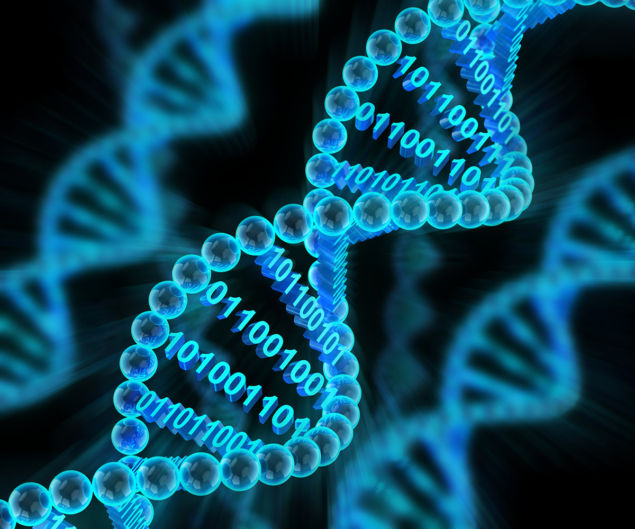
IMG Credit: Shutterstock ymgerman
DNA, in simple terms, is the blueprint for organisms, which is a sequence of nucleotides: A’s, C’s, G’s, and T’s. When DNA is used to store data, it is able to maintain its integrity for a prolonged period of time, approximately 10,000 years without any power supply or extensive care. Also, its small size and weight as well as its nature to be less susceptible to technical failures make DNA an ideal candidate for the use in data storage. To put the efficacy of DNA in storing data, all the information stored inside a warehouse-sized data center could fit in a few typical board game dice when converted into snippets of DNA.
These advantages are precisely why Microsoft and the University of Washington have invested in exploring the potential of DNA in data storage. As a result, Microsoft and UW were able to create a fully automated DNA data storage system that could convert zeros and ones into A’s, C’s, G’s, and T’s, which create a snippet of DNA. This piece of DNA is stored until it is read out and converted back to zeros and ones that the computer can understand. The team from the Molecular Information Systems Lab at the University of Washington has already demonstrated the functionality of DNA by storing photographs, literary works, pop videos, and archival recordings and retrieving these files successfully. Moreover, they were able to produce 1 gigabyte of data in DNA, which is five times the previous world record of 200 megabyte. In the near future, it is estimated that the data storage in DNA is likely to increase at an exponential rate and be completely capable of meeting the demand.
However, using DNA to store data is not without any disadvantage. Currently, the cost of synthesis per data is astronomical. The speed at which the snippet of DNA is read is also slow. Furthermore, DNA cannot be rewritten, and the stored data can only be accessed in its entirety. These drawbacks make DNA less ideal in some aspects for use in data storage. Having said that, advancements in science and technology in the future could well solve these setbacks. Another possibility is that the researchers could figure out a way to build a hybrid storage that uses the traditional method of data storage and the novel DNA data storage in areas where each excel at so that they could complement one another. Anyhow, the future of data storage science is bright.


Comments